
Nothing frustrates website owners more than watching their carefully crafted content sit in Google’s limbo. The “Crawled – Currently Not Indexed” status in Google Search Console signals that Google has found your pages but hasn’t added them to its search index.
This issue affects websites of all sizes and can significantly impact your organic traffic potential.
Understanding the ‘Crawled – Currently Not Indexed’ Status
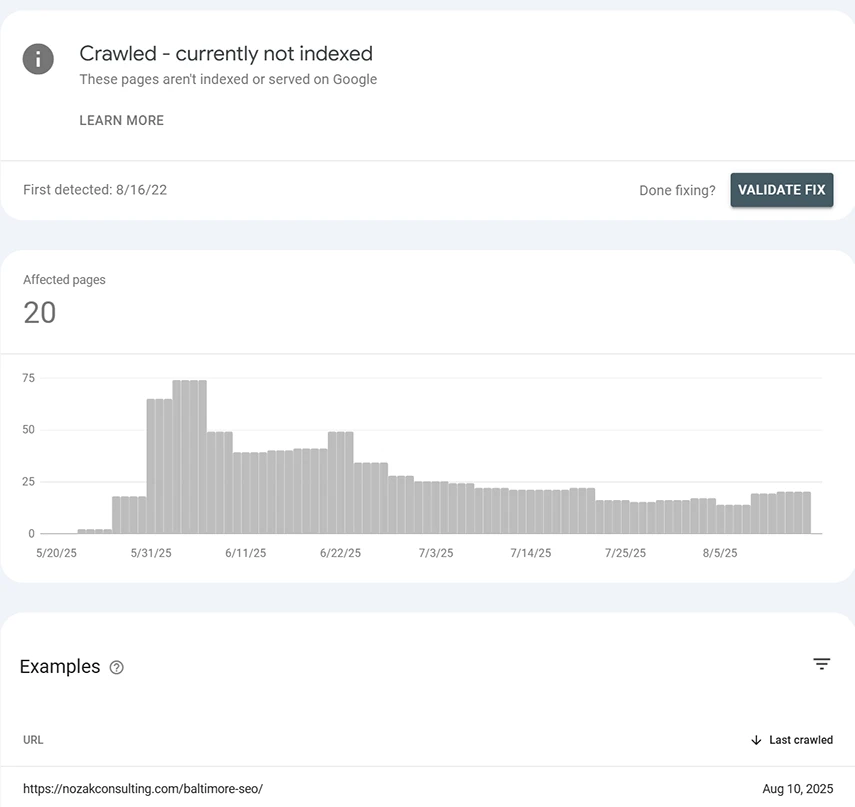
Google’s crawling and indexing process operates like a massive library system. When Googlebot visits your website, it reads your content (crawling) and then decides whether to add those pages to its searchable database (indexing). The “Crawled – Currently Not Indexed” status means Google completed the first step but stopped short of the second.
This situation differs from other indexing issues because Google has actually seen your content. The search engine simply chose not to include it in search results yet. Understanding this distinction helps you target the right crawled currently not indexed fix for your specific situation.
Several factors influence Google’s indexing decisions:
- Content quality and uniqueness
- Technical website issues
- Page authority and relevance
- Server response times
- Internal linking structure
The status doesn’t necessarily indicate poor content quality. Even well-written pages can experience indexing delays due to technical barriers or competitive content landscapes.
Common Causes Behind Indexing Issues
Website architecture problems often prevent pages from reaching indexed status. Slow loading times frustrate both users and search engines, creating barriers to proper indexing. When your server takes too long to respond, Google may crawl the page but deprioritize it for indexing.
Duplicate content presents another significant challenge. Google avoids indexing multiple pages with identical or substantially similar information. This includes:
- Product variations with minimal differences
- Category pages with overlapping content
- Syndicated content from other websites
- Multiple URL versions of the same page
Low-quality content signals also influence indexing decisions. Pages with thin content, excessive keyword stuffing, or poor user experience metrics may get crawled but remain unindexed. Google’s algorithms continuously evaluate content value and user engagement to determine indexing priority.
Internal linking structure affects how Google discovers and prioritizes your content. Pages buried deep within your site architecture or lacking internal links may struggle to achieve indexed status, even after being crawled.
Technical SEO issues create additional barriers. Robots.txt files, meta robots tags, and canonical URL problems can prevent indexing despite successful crawling.
Step-by-Step Solutions for Getting Pages Indexed
Start by examining your page’s technical foundation. Check your page loading speed using Google PageSpeed Insights or similar tools. Pages loading slower than three seconds often experience indexing delays. Optimize images, enable compression, and consider upgrading your hosting if speed issues persist.
Review your content quality objectively. Does your page provide unique value that competitors don’t offer? Content should be comprehensive, well-researched, and directly address user search intent. Thin content pages under 300 words rarely achieve indexed status in competitive niches.
Strengthen your internal linking strategy by connecting related pages throughout your website. Add contextual links from high-authority pages to your unindexed content. This signals to Google that the content deserves attention and helps distribute page authority across your site.
Submit your pages through Google Search Console’s URL Inspection Tool. This direct submission method requests immediate crawling and indexing consideration. While not guaranteed to result in indexing, it often accelerates the process for quality content.
Address any technical barriers preventing indexing:
- Remove or modify restrictive robots.txt entries
- Check for noindex meta tags
- Fix canonical URL issues
- Resolve server error codes
Monitor your website’s crawl budget allocation through Search Console. Large websites may need to prioritize which pages Google crawls by improving site structure and removing low-value pages.
Advanced Techniques for Persistent Cases
When standard solutions fail, advanced strategies can help achieve the crawled currently not indexed fix you need. Create strategic content clusters around your unindexed pages. Develop comprehensive topic coverage that positions your unindexed content as part of a valuable resource network.
Build external links to your unindexed pages through legitimate outreach efforts. Quality backlinks signal content importance to Google and can accelerate indexing decisions. Focus on relevant, authoritative websites within your industry or niche.
Consider the timing of your content publication. Google processes enormous amounts of new content daily, and indexing delays sometimes result from processing backlogs rather than content quality issues. Patience combined with consistent optimization efforts often yields results.
Analyze your competitors’ indexed content for insights into what Google values in your niche. Look for content gaps, formatting differences, or topic coverage that might explain indexing preferences. Use these insights to enhance your own content strategy.
Leverage social media promotion to generate early engagement signals. While social signals don’t directly impact indexing, increased traffic and user engagement can indirectly influence Google’s indexing decisions.
Monitoring and Maintaining Indexed Status
Regular monitoring prevents future indexing issues from derailing your SEO progress. Set up automated alerts in Google Search Console to notify you when pages lose indexed status or encounter crawling problems.
Track your indexing success rates monthly. Calculate the percentage of submitted pages that achieve indexed status within 30 days. Declining rates may indicate emerging technical issues or content quality problems requiring attention.
Maintain a content audit schedule that reviews page performance quarterly. Remove or consolidate underperforming content that may compete with your valuable pages for crawl budget and indexing priority.
Document successful strategies that achieve consistent indexing results for your website. Every site operates within unique constraints, and understanding what works for your specific situation creates a playable framework for future content.
Taking Action on Your Indexing Issues
The “crawled currently not indexed” fix requires systematic diagnosis and targeted solutions. Start with technical fundamentals like page speed and site structure, then progress to content quality and promotion strategies.
Remember that indexing success often requires patience combined with consistent optimization efforts. Google’s algorithms continuously evolve, and what works today may need adjustment tomorrow.
Ready to resolve your indexing challenges and improve your search visibility? The SEO experts at Nozak Consulting has helped over 500 businesses overcome technical barriers and achieve consistent indexing success. Schedule a consultation today to develop a customized strategy that gets your valuable content in front of your target audience.
