
Your blog publishes consistently. You target keywords. You optimize meta descriptions. Yet your organic traffic remains stubbornly flat.
The problem isn’t your content quality—it’s your content structure. Search engines reward sites that demonstrate depth and breadth on specific topics, not collections of disconnected articles. Without a strategic framework organizing your blog, even exceptional posts struggle to rank against competitors who understand how modern SEO actually works.
Three proven frameworks can transform scattered blog content into authority-building ecosystems: pillar pages, topic clusters, and hub-and-spoke models. Each approach helps search engines understand your expertise while guiding readers through comprehensive topic coverage.
Why Traditional Blog Strategies Fall Short

Most blogs follow a straightforward approach: identify a keyword, write an article, publish, repeat. This works for building a content library, but it doesn’t build authority.
Search engines like Google prioritize sites that cover topics comprehensively rather than superficially. A single 1,500-word article about “email marketing” can’t compete with a site offering an in-depth resource linking to detailed guides on segmentation, automation, deliverability, and campaign metrics. The algorithm recognizes the second site as more authoritative because it demonstrates genuine expertise across multiple facets of the topic.
Traditional keyword-focused strategies also create internal competition. When you publish three separate articles all targeting variations of “social media marketing,” those pages compete against each other in search results. Your own content cannibalizes its ranking potential instead of working together to establish authority.
Strategic content frameworks solve both problems by organizing related content into clear hierarchies that signal expertise to search engines and provide better user experiences for readers.
The Pillar Page Framework
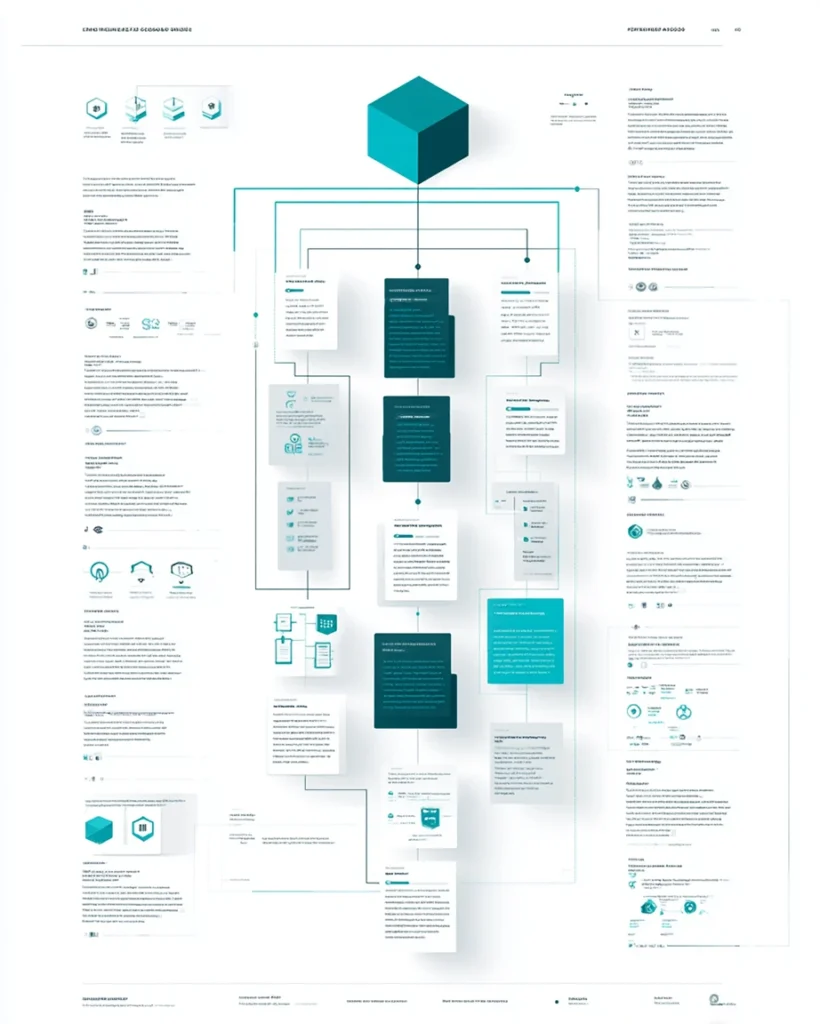
A pillar page serves as a comprehensive, authoritative resource covering a broad topic from multiple angles. Think of it as your definitive guide—typically 3,000 to 5,000 words—that addresses a subject thoroughly while linking to more detailed supporting content.
The pillar page itself targets a competitive, high-volume keyword that would be difficult to rank for with a standard blog post. By creating an extensive resource that covers every major aspect of the topic, you signal to search engines that your site deserves to rank for that term.
What makes pillar content effective?
Pillar pages work because they satisfy user intent completely. Someone searching for “content marketing” doesn’t want a 500-word overview—they want to understand strategy development, content types, distribution channels, measurement, and tools. A well-executed pillar page provides that comprehensive overview while linking to cluster content that explores each element in greater depth.
From a technical SEO perspective, pillar pages create strong internal linking structures. Every cluster page links back to the pillar, and the pillar links to all clusters. This interlinking helps search engine crawlers understand relationships between pages and distributes authority throughout the content ecosystem.
Consider a digital marketing agency creating a pillar page about SEO. The main page covers fundamentals: what SEO is, why it matters, core components like technical SEO, on-page optimization, and link building. Within each section, links point to detailed cluster articles about XML sitemaps, meta tag optimization, or outreach strategies. A reader can get a complete overview from the pillar or dive deep into any specific area through the clusters.
The structure keeps users on your site longer—a positive engagement signal—while demonstrating comprehensive topic coverage that search engines reward.
Topic Clusters: Building Authority Through Depth
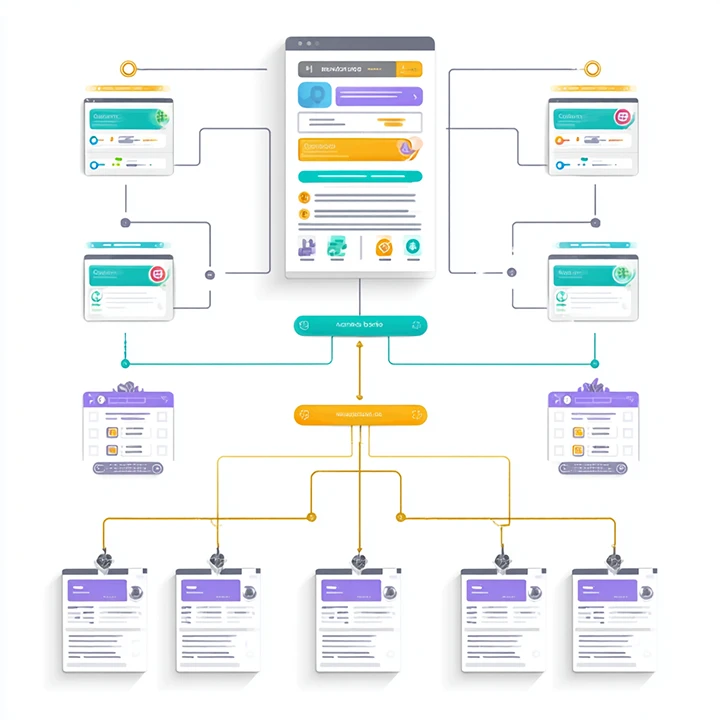
Topic clusters represent an evolution of the pillar concept, designed specifically for complex sites with extensive content needs. Rather than a single pillar page, this framework organizes content around central hub pages with multiple cluster pages branching off to cover every conceivable subtopic and user intent.
The difference between a pillar and a hub is subtle but important. A pillar page combines breadth and depth into one comprehensive resource. A hub page acts more as a navigational gateway—introducing the topic broadly but primarily serving to direct readers toward the cluster content where the real depth lives.
How cluster content builds topical authority:
Each cluster page targets a specific long-tail keyword related to the hub topic. If your hub covers “local SEO,” cluster pages might target “Google Business Profile optimization,” “local citation building,” “review management strategies,” or “local link building tactics.” Together, these pages create what SEO professionals call semantic density—search engines clearly see the relationships between topics, entities, and intents your site covers.
This approach works particularly well for enterprise sites or businesses serving diverse customer needs. An ecommerce platform selling outdoor gear might have a hub page about “camping equipment” with clusters covering tent selection, sleeping bag ratings, portable cooking gear, and camping safety. Each cluster can then link to product pages, creating a natural path from information to purchase.
The key to effective topic clusters is ensuring every piece of content connects logically. Orphan pages—content that isn’t linked from the hub or related clusters—waste their ranking potential. Every article should link back to the hub using relevant anchor text, and the hub should prominently link to all clusters.
Hub-and-Spoke: Simplicity Meets Strategy
The hub-and-spoke model shares DNA with topic clusters but emphasizes simplicity and navigation. It’s particularly effective when you’re tackling a single competitive keyword by throwing comprehensive coverage at it.
In this framework, the hub page serves as the central resource introducing a broad topic. The spoke pages branch off to cover specific subtopics in detail. The defining characteristic is the linking structure: the hub links to all spokes, and all spokes link back to the hub (and sometimes to each other when relevant).

When hub-and-spoke makes sense:
This model works best for topics with clear, obvious subtopics. A blog post about “email marketing” naturally branches into spokes about list building, segmentation, subject line optimization, automation workflows, and analytics. Each spoke explores its subtopic comprehensively—1,500 to 2,500 words focused on that specific element.
The hub page doesn’t need to be as exhaustive as a traditional pillar. Instead, it provides context, explains why the topic matters, and guides readers to the spoke content most relevant to their needs. This makes hub pages easier to maintain and update as your spoke content evolves.
Many SEO professionals use “hub-and-spoke” and “topic cluster” interchangeably, and that’s acceptable—the principles are nearly identical. The practical difference is that hub-and-spoke emphasizes the spoke content as the primary value delivery, while topic clusters position the hub as a more substantial resource itself.
Choosing the Right Framework for Your Blog
No single framework works universally. The right choice depends on your industry, content goals, current site structure, and resources.
Pillar pages work best when:
- You’re targeting a single, highly competitive keyword
- You have the resources to create and maintain comprehensive, long-form content
- Your topic lends itself to being covered thoroughly in one cohesive resource
- You want to establish immediate authority on a subject
Topic clusters excel when:
- You’re covering complex subjects with many distinct subtopics
- You need to address multiple user intents related to a central theme
- You have existing content that can be organized into logical groupings
- Your site has strong domain authority and can compete for multiple related terms
Hub-and-spoke makes sense when:
- You want a straightforward, easy-to-implement structure
- Your topic has clear, obvious subtopics that stand alone
- You’re starting fresh and building authority from scratch
- Simplicity and maintainability matter as much as comprehensiveness
Many successful blogs actually combine approaches. A site might use pillar pages for its most important topics while implementing hub-and-spoke for secondary subjects. The key is maintaining consistent internal linking and avoiding orphan content that doesn’t fit into any framework.
Implementation: Turning Strategy Into Action

Deciding on a framework is step one. Actually building it requires systematic planning and execution.
Start by identifying your core topics. What subjects are most relevant to your business? What do your customers ask about repeatedly? Look at your existing content performance—which topics drive the most engagement and conversions? These become your framework foundations.
Next, conduct thorough keyword research within each topic. You need to understand not just the primary keywords but all the related long-tail variations and question-based queries people search for. Tools like Ahrefs, SEMrush, or even Google’s “People Also Ask” feature reveal the full scope of user intent around your topic.
Map your content. Create a visual representation showing your hub or pillar page in the center with all cluster or spoke pages radiating outward. Note which content already exists and what needs to be created. This mapping process often reveals content gaps—subtopics you haven’t addressed that your framework needs.
Content creation and optimization:
If you’re building pillar content, start with structure. Outline every major section and subsection before writing. Use clear H2 and H3 headings that incorporate related keywords naturally. Break up text with examples, data, and internal links to cluster content. The goal is comprehensive coverage that remains readable and scannable.
For cluster or spoke pages, focus each piece on a specific intent. A cluster page about “XML sitemaps” should answer every question a reader might have about creating, submitting, and optimizing sitemaps—not veer into unrelated SEO topics. Depth matters more than breadth at the cluster level.
Internal linking is critical. Every cluster or spoke must link back to the hub or pillar using descriptive anchor text. The hub should prominently link to all clusters. When relevant, create contextual links between cluster pages—if your email segmentation article mentions automation, link to your automation workflows cluster.
Don’t forget technical optimization. Each page needs optimized title tags and meta descriptions. Header tags should follow logical hierarchy. Images need descriptive alt text. Page load speed matters. These fundamentals ensure your strategic framework isn’t undermined by technical issues.
Measuring Framework Success

Strategic content frameworks deliver measurable improvements, but you need to track the right metrics.
Monitor organic traffic to your hub or pillar page and all related cluster content as a group. Are you seeing collective growth? Individual cluster pages might fluctuate, but the overall topic cluster should trend upward as search engines recognize your authority.
Track keyword rankings across the entire framework. Your hub might target a competitive term that takes months to move, but cluster pages should rank more quickly for their long-tail keywords. As clusters gain traction, they pass authority back to the hub, gradually improving its ranking.
Pay attention to internal link clicks in Google Analytics. Are readers navigating from hub to clusters? Are they exploring multiple related articles? High internal click-through rates indicate your framework is working—readers find value in your topic coverage and want to learn more.
Conversion metrics matter too. If your framework targets bottom-of-funnel topics, measure lead generation or sales influenced by content within that cluster. Strategic frameworks should drive business results, not just traffic.
Common Mistakes to Avoid
Even well-intentioned frameworks fail when execution falters. Watch for these pitfalls.
Creating shallow hub content is a critical error. Your hub or pillar page must provide genuine value, not just a collection of links. If readers land on your hub and immediately click away because it offers nothing substantive, search engines notice. The page needs to justify its existence as a destination, not just a directory.
Keyword cannibalization still happens when multiple pages within a framework target identical keywords. Each cluster or spoke should focus on a distinct keyword variation or intent. Review your content regularly to ensure pages aren’t competing against each other.
Neglecting updates kills framework effectiveness over time. Industries evolve. Information becomes outdated. Competitors publish better content. Schedule quarterly reviews of your frameworks to refresh information, add new cluster content, and maintain competitive advantage.
Poor internal linking structure undermines everything. If your clusters don’t link back to the hub, or if the hub doesn’t prominently feature all cluster links, search engines can’t understand your framework. Manual audits or tools like Screaming Frog help identify linking gaps.
Building Sustainable Blog Authority
Strategic content frameworks aren’t quick wins. They require upfront planning, consistent execution, and ongoing maintenance. But they’re how modern blogs compete for visibility in increasingly crowded search results.
The sites ranking on page one aren’t there by accident. They’ve organized their content strategically, demonstrated comprehensive topic expertise, and created user experiences that keep readers engaged. Pillar pages, topic clusters, and hub-and-spoke models are the tactical implementations of those strategic principles.
Your blog’s success isn’t determined by how many articles you publish. It’s determined by how strategically you organize them and how effectively you demonstrate authority on subjects that matter to your audience.
Ready to build a content strategy that actually drives organic traffic? Nozak Consulting specializes in developing comprehensive SEO frameworks tailored to your business goals. Our team can audit your existing content, identify framework opportunities, and create a roadmap for sustainable organic growth. Schedule a consultation to discover how strategic content organization can transform your blog’s performance.
